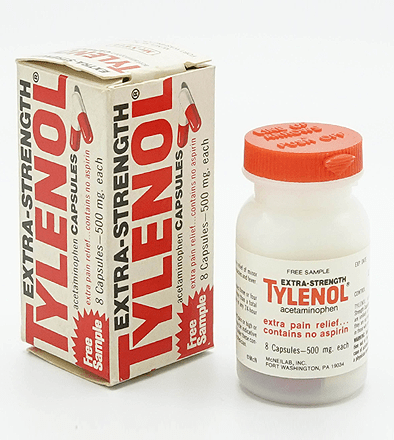
Note: from Drug Therapeutics and Regulation in the US, fda.gov
We all have been there: a pounding headache or a stubborn flu that leaves us reaching for the nearest and most familiar red-capped bottle on the shelf, Tylenol. For adults, two Tylenol pills are taken orally every six hours. Usually when our pain doesn’t subside, we take another dose after six hours until we are better. Of course, it isn’t recommended to take more than the directed dosage due to the consequences of liver damage.
But why every six hours?
There is a reason for this. But let’s talk about the history of Tylenol. Fun!
The discovery of acetaminophen was first described in literature in 1878. It wasn’t until several years later two doctors treated a patient with intestinal parasites. Having run out of naphthalene, which was the medication at the time to treat such a condition, the pharmacist mistakenly refilled the medicine with acetanilide instead. Acetanilide, when broken down, is converted into acetaminophen and aniline. In the body, acetaminophen (which we all know is the ingredient of Tylenol) has analgesic (pain reliever) and antipyretic (fever reducer) properties. However, aniline, which was also broken down from acetanilide in small amounts, had severe toxic side effects.
Today the use of safer chemical derivatives to make acetaminophen in the US, or paracetamol to the rest of the world, has been the mainstay. Marketed in 1955 as the pill “for little hotheads” as a temporary fever reducer for children, it became a safer alternative than aspirin without the stomach upset and bleeding side effects.
How Tylenol reduced pain is not known, but its action may be attributed to blocking cyclooxygenase (COX) – an enzyme that breaks down to make prostaglandins, a type of fatty substance that have hormone-like effects on our bodies. Prostaglandins are the culprit behind inflammation which is the driver of pain. So taking acetaminophen would, in theory, block the effects of cyclooxygenase on prostaglandins, which eventually reduces pain associated with inflammation.
So we come back to our question again: why is Tylenol recommended to be taken orally every six hours as needed?
This is where pharmacokinetics (PK) enters.
In biotechnology, pharmacokinetics is used extensively in drug discovery and clinical research. Don’t allow the long word to intimidate you. It is one branch of pharmacology that studies the action of a drug after entering our body through quantitative measurements by several calculated mathematical values. It is measured through four stages; how it is absorbed in the body, where the drug is distributed and localized, how long it takes for it to break down, and the length of time it takes to eliminate it from our system.
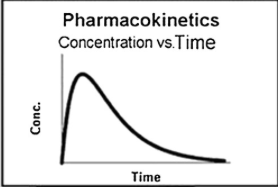
Note: from Kaplan et al, An Introduction to Basic Pharmacokinetics. Transplantation, 2015
PK is defined as how much drug concentration exists over time. As we intake a drug in the beginning at the onset of pain, the drug level in our body is at its highest level. So if Tylenol were given intravenously through the vein, for example, it is immediately detected in the plasma. In time acetaminophen concentration drops and returns back to baseline as time progresses and a repeated dose would be required, if needed.
In PK, many factors are at play in the drop of drug concentration over time. One factor is called the half life. Getting a bit more nerdy here, it is represented as t1/2 measured in hours (h), or t1/2 (h), which is the amount of time for a drug concentration to decrease in the blood by 50% of its original concentration.
To understand why we are directed to take the drug every six hours, we have to look into this acetaminophen injection study from the FDA database. Young children, teenagers and adults were given specific doses of Tylenol intravenously based on their body weights. In all the groups, the half life was about 2-3 hours. For the adults weighing 50 kg or more that were given 1000 mg of Tylenol, their half life was 3 hours, or approximately about 500 mg of drug was left in their system at 3 hours. Within the six hour timeframe, there is enough acetaminophen in the bloodstream to manage pain. If the pain relief starts to wear off, we can take it again after six hours. The drug isn’t completely eliminated and can take up to 24 hours to be cleared from our system.
Understanding the entire biological process of drugs in our bodies is more complicated than just looking at pharmacokinetics alone. But PK is one vital factor that helps scientists and doctors determine the dose, the length of time and the type of administration to be given (intravenous, subcutaneous, oral, or tropical for example) for a drug to achieve the most efficacious therapy with the least amount of toxicity.
Reference:
Gerriets V, Patel P, Nappe TM. Acetaminophen. [Updated 2024 Jan 11]. In: StatPearls Publishing
Kaplan, B., Yost, S., & Loucks, J. (2015). An Introduction to Basic Pharmacokinetics. Transplantation, 99(5), 903–907


Leave a Reply